
Life in the Head of a Gen-Z: How Behind the Reels is Using Storytelling to Promote Youth Mental Health
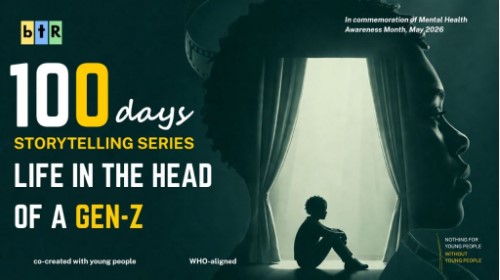
Life in the Head of Gen-Z is a WHO-aligned intervention supporting youth mental health promotion through lived experiences and storytelling
Someone asked me: “Why Storytelling for Mental Health? Isn’t it a distraction?!”
Let me ask you: Have you ever changed your life because of a statistic? Because nearly 1 in 6 people globally report feeling lonely? I haven't.
If statistics changed behaviour, doctors wouldn't smoke.
Psychologists wouldn't struggle with burnout.
People who know the dangers of loneliness wouldn't still isolate themselves.
But I have changed because of a conversation I had with a stranger at a mall.
Because of a film that stayed with me for 2 days, wondering what type of juice the writer drank
Because of books that brought tears to my eyes without hearing a word
Because of a random person’s story of resilience and hope on Instagram
Storytelling is not a distraction to mental health. It is one of the oldest technologies humans have developed to help each other survive.
From the Stone Age to the Fourth Industrial Age: Stories make our hearts beat. Storytelling has been shown to be a highly effective, low-cost intervention for youth mental health. By allowing youth to process trauma through metaphors, connect with coping narratives, and reduce isolation, structured storytelling can lower anxiety and boost depression literacy.
In May 2026, Behind the Reels launched "Life in the Head of a Gen-Z" in commemoration of Mental Health Awareness Month.
Across Africa, mental health holds stigma despite the numerous awareness campaigns every May and October. We have awareness campaigns upon awareness campaigns, still mental health has risen to be a leading cause of disability across Sub-Saharan Africa (Global Burden of Diseases, 2023). Awareness as a standalone, it seems, isn't enough.
Before "Life in the Head of a Gen-Z" was designed, I asked a key question: How can we engage young people better in mental health solutions? This led me to design a youth-led psychosocial intervention that moves young people from beneficiaries to co-creators of wellbeing.
Life in the Head of Gen-Z builds on WHO (2020) Youth-Centred Digital Health Interventions Framework (nothing for young people without young people), and it is guided by 3 psychological frameworks. i). Narrative Identity Theory (Primary Framework). ii). Expressive Writing & Emotional Disclosure Model. iii) Social Contact Theory (Anti-Stigma Framework).
The project highlights the lived experiences of this population, ranging from pain, trauma, struggles, fear, hope, and resilience, amongst others. Moving beyond "sole beneficiaries," it utilises a participatory approach that engages directly with young people through guided and prompted submitted entries, progressing to dialogues and introducing relevant upward support. This intervention sits at the intersection of community psychology, narrative therapy, youth participation, and public mental health promotion, shifting focus from individual pathology to collective wellbeing.