
What 26 Stories Teach Us About Gen-Z Mental Health
Inside the ongoing "Life in the Head of a Gen-Z" series.
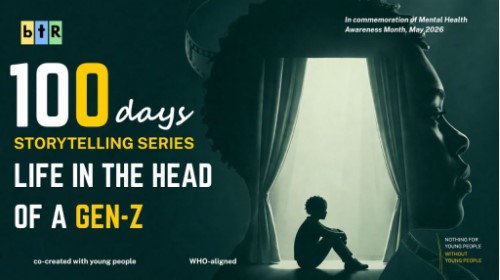
In commemoration of Mental Health Awareness Month May 2026, we launched Life in the Head of a Gen-Z. Young people co-create for wellbeing through storytelling and lived experiences to support the collective wellbeing of Gen-Z. This insight is based on 26 deeply personal narratives from individuals aged 18 to 29, predominantly from Nigeria and Ghana, spanning students, early working professionals, and those currently unemployed.
We analyzed the stories across 12 different dimensions: presenting concerns, triggers, emotional states, symptoms, coping strategies, support systems, help-seeking behavior, barriers to help, resolution status, key needs, turning points, and demographics.
What emerged from this qualitative analysis is a generation navigating profound emotional complexity. This article distills what this 26 stories teach us into a comprehensive overview, revealing the dominant struggles, the systemic barriers to care, and the unmet needs of Gen-Z.
The Three Pillars of Distress
Across the 26 stories, 31 distinct presenting concerns were identified. However, three dominant pillars emerged as the defining features of Gen-Z distress:
1. Anxiety: The most prevalent concern, appearing in 24 out of 26 stories (92%). For many, anxiety is not just a clinical diagnosis but a tangible, daily weight. As one co-creator described a panic attack: "I couldn't breathe. My airway felt shut. My eyes watered and everywhere felt so small. I thought I was dying."
2. Identity and Self-Esteem: Identified in 7 stories (27%), these struggles are often rooted in early childhood experiences of comparison. Chronic familial criticism, as described by a participant in ("Whenever I came home with a result, my mother would say, 'Why can't you be sharp like your sister Chioma?'"), leads to an internalized voice of inadequacy that persists into adulthood.
3. Loneliness: Present in 6 stories (23%), but felt across nearly all narratives. It is the natural byproduct of severe anxiety and identity struggles. When young people feel unworthy or overwhelmed, they withdraw. As noted in a story, this leads to a profound disconnect: "We're online all the time but disconnected from ourselves."
The Primary Triggers
When we look at what sparks these mental health struggles, "Family" emerges as the most frequently cited primary trigger (7 stories). This includes parental loss, domestic violence, paternal rejection, and the crushing weight of familial expectations.
School was the second most common trigger (5 stories), driven by academic pressure and the competitive environment of higher education. However, a significant finding is that multiple triggers were identified in 7 stories. Gen-Z mental health struggles are rarely caused by a single factor; they are the result of a convergence of overlapping pressures, financial stress, work demands, relationship issues, and family dynamics.
Symptoms and Coping
The most prevalent symptom across all stories was a loss of motivation (20 stories, 77%), closely followed by overthinking and emotional exhaustion (both in 13 stories, 50%). This suggests a generation that is profoundly depleted of psychological energy.
How do they cope? The analysis reveals a reliance on avoidance (8 stories, 31%) and prayer or religion (7 stories, 27%). While faith is a culturally acceptable and powerful coping tool, the reliance on avoidance is concerning because it prevents individuals from addressing the root causes of their distress. Critically, 4 stories (15%) reported having no coping strategy at all, simply enduring their struggles in silence.
Help-Seeking and Barriers
Perhaps the most alarming finding of the analysis is the gap in help-seeking behavior. Out of 26 stories, 20 (77%) reported never seeking help of any kind. Only 3 individuals actively sought help, while 2 wanted help but could not access it.
When barriers were identified, stigma was by far the most common (18 stories, 69%), followed by fear of judgment (12 stories, 46%). Other barriers included not knowing where to go, lack of services, and cost. This highlights the deep cultural and structural obstacles that prevent Gen-Z from accessing professional mental health services.
The Critical Support Gap
The support system analysis reveals a striking paradox. While family is the most common trigger for mental health struggles, it is rarely a source of support, appearing as a support system in only 2 stories.
Friends are the most common source of support (11 stories, 42%), but 38% of the individuals in this study (10 stories) are navigating their mental health struggles entirely alone. Professional help was mentioned as a support system in only 1 story, underscoring the massive gap between the needs of this generation and the accessibility of care.
What Gen-Z Wants Most
Emotional support is the number one need (22 stories, 85%). This was closely followed by "someone to listen" (11 stories, 42%).
This suggests that many Gen-Z individuals do not necessarily need clinical intervention alone; they need genuine human connection. They need active listening, peer support, and community-based approaches that normalize vulnerability without judgment.
A Path Forward
The resolution status of the 26 stories offers a mixed but hopeful picture. 14 stories (54%) reported an "Improving" status, suggesting that with time, self-reflection, and personal decisions, many are finding pathways toward healing. However, 10 stories (38%) reported being "Still struggling."
Recovery is often driven by internal cognitive shifts ("Realization" in 15 stories), internal resolve ("Personal decision" in 11 stories), or pivotal external moments ("Life event" in 8 stories).
To support this generation, interventions must look beyond traditional clinical approaches. They must invest in community-based mental health programs, normalize help-seeking to dismantle cultural stigma, and actively build safe spaces where Gen-Z can express vulnerability without judgment.
---
This analysis is based strictly on the qualitative data collected from 26 personal stories in the "Life in the Head of a Gen-Z" project.
Life in the Head of a Gen-Z is a World Health Organization Aligned psychosocial intervention supporting youth mental health promotion through lived experiences and participatory storytelling to aid the collective wellbeing of Gen-Z.
🟢 For sponsorship and partnerships, send an email to info@behindthereels.com.